Bridal jewellery belongs to the wife: Supreme Court, June 2026
Gold and gifts given to a bride for her own use vest in her alone, the Supreme Court held. What that means for a recovery claim in the Family Court.
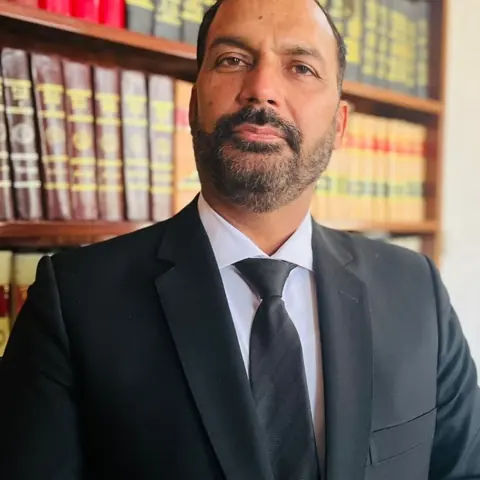 Muhammad Javed ChishtiAdvocate High Court4 min read
The facts
A wife said her parents had given her 87 tolas of gold at the time of her marriage. She wanted it back, and her husband resisted the claim.
The Lahore High Court decided against him. He appealed to the Supreme Court.
The press reports give no case number. They say nothing on how the wife proved the gift, or who held the gold when the case began.
What the court decided
The Supreme Court dismissed the husband's appeal and upheld the High Court. As reported, it held that property given to a woman at her marriage for her own use vests absolutely in her. Neither the husband nor his family can claim it, and withholding it from her is unlawful.
A claim to get it back belongs in the Family Court, under section 5 of the Family Courts Act 1964 and its Schedule.
Ownership is not determined by nomenclature but by the intention underlying the transfer.
So calling the gold jahez or bari does not settle whose it is. The court looks at why it was given.
Why it matters
Bridal jewellery is sometimes kept by the husband's family after the wedding, and it becomes part of the dispute when the marriage breaks down.
Where to file. The Family Court. For Kallar Syedan and Rawalpindi that is the Family Court in Rawalpindi district; in Islamabad, the Family Courts of the Islamabad district judiciary. If you are also suing for khula or dissolution, the jewellery claim can go in the same plaint (proviso to section 7(2)).
Ownership is settled; proof is not. The ruling says who owns bridal gold. It does not prove that the gold was given, or where it is now. List each item in the plaint with its description, value, date and giver, and the value you claim if it is not returned. Husbands often reply that the articles were taken back at the rukhsati, or never given, so collect what you can early:
- the nikahnama, especially its dowry and bridal gift columns;
- jewellery purchase bills and bank withdrawals;
- photos or video of the jahez or the rukhsati;
- the names of the people who bought or handed over the gold.
If you fear the gold will be sold during the case, the Family Court can make an interim order to preserve property (section 21A).
Dower is a different claim. Gold promised as haq mehr in the nikahnama is a dower claim, with its own time limits. Plead it separately from gifts.
Punjab and Islamabad differ on appeals. No appeal lies from a dowry decree of Rs 100,000 or less in Punjab, or Rs 30,000 or less in Islamabad (section 14(2)(b)). And since the 27th Amendment, a High Court's decision on a writ petition in a family case cannot be appealed, except in guardianship. In most new family cases the High Court is now the last stop.
The haq mehr and dowry guide explains the claim step by step.
Questions people ask
My in-laws gave me the gold as bari. Can they take it back?
Section 5 of the Dowry Act vests bridal gifts from the bridegroom or his parents in the bride. If the family says the gold was only lent for the wedding, the question becomes why it was given, and the court decides that on the evidence.
Does the same rule apply to gold written in the nikahnama as haq mehr?
That is a dower claim. Prompt dower must be claimed within 3 years of demand and refusal (or of dissolution, if no demand was made), and deferred dower within 3 years of dissolution by death or divorce (Limitation Act 1908, Articles 103 and 104).
Muhammad Javed Chishti
Advocate High Court
He is actively engaged in legal practice before courts and relevant judicial and administrative forums in Kallar Syedan, Rawalpindi and Islamabad. His professional approach is based on legal research, careful case preparation, effective advocacy and a thorough understanding of applicable laws and judicial precedents.
Discuss your matterThis note is general information about the law and is not legal advice on any particular matter.