Rs 500,000 against husbands: two Supreme Court orders in family cases
In 2025 and 2026 the Supreme Court dismissed husbands' petitions and ordered each to pay Rs 500,000 to the woman. What the two orders say.
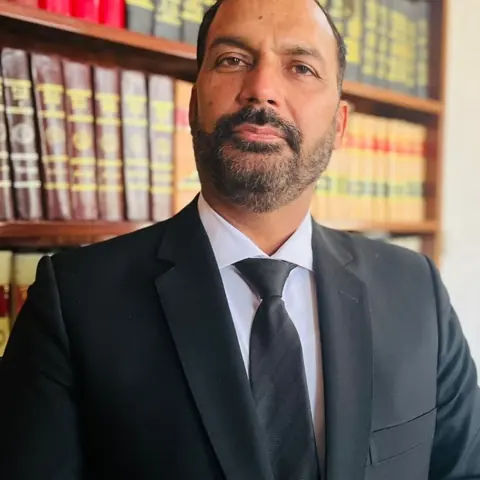 Muhammad Javed ChishtiAdvocate High Court5 min read
The facts
The 2026 case
A woman obtained a khula decree on 13 September 2014 and later married again. Her former husband went on litigating to have the second marriage declared unlawful, including section 22-A CrPC applications to a Justice of the Peace. The Peshawar High Court decided against him, and he petitioned the Supreme Court for leave to appeal.
The 2025 case
The husband challenged a Peshawar High Court judgment of 3 March 2025 on his wife's claims for dower and maintenance. Her dowry articles were also in issue. During the case he had alleged that she was infertile and questioned her "womanhood". Medical tests disproved the allegation.
What the court decided
In the 2026 case the Supreme Court held that khula ends the marriage once the iddat is over. The former husband's consent, it said, "carries no legal significance". Using litigation to harass a woman was held to be an abuse of process. The petition was dismissed with costs of Rs 500,000, payable to the woman within 30 days.
In the 2025 case the court held that infertility is no ground to deny a wife her dower or maintenance. The petition was dismissed and the husband was ordered to pay Rs 500,000 to his wife.
Why it matters
Costs can be heavy. Rs 500,000 is a large sum for most families in Kallar Syedan or Rawalpindi, and in both cases it was ordered paid to the woman herself.
After khula, complete the paperwork. In Punjab the Family Court sends a khula decree to the Chairman of the Arbitration Council within 3 days (section 21B, Family Courts Act). The Chairman treats it as a talaq notice and the 90-day period runs; the union council then issues a certificate that the divorce is effective. Let that process and the iddat finish before remarrying, and keep certified copies in case the marriage is ever questioned. In Islamabad, which has no section 21B, section 8 of the Muslim Family Laws Ordinance 1961 applies the same notice and 90-day process to a marriage dissolved otherwise than by talaq.
Dower rights. Besides the 2025 order, two statutory rules help a wife. A decree under the Dissolution of Muslim Marriages Act 1939 does not affect her dower rights (section 5). Where the nikahnama does not say how the dower is payable, the whole amount is presumed payable on demand (section 10, Muslim Family Laws Ordinance). Khula is different. In Punjab the court may direct the wife to give up as much as half her deferred dower or a quarter of her admitted prompt dower (section 10(5), Family Courts Act); in Islamabad it restores to the husband the haq mehr she received at the marriage.
The route has changed. Petitions like these reached the Supreme Court under the law before the 27th Amendment of 2025. Now no appeal lies against a High Court's Article 199 decision in a family case, except guardianship (proviso to Article 175F(1)). In most family cases the High Court is the last stop, so build the case properly in the Family Court.
The khula guide sets out the court route, and the execution and appeals guide covers appeals.
Questions people ask
After khula, does a woman need her former husband's consent to remarry?
In the June 2026 case the Supreme Court held that khula ends the marriage once the iddat is over, and that the former husband's consent carries no legal significance.
Can a husband refuse haq mehr because his wife cannot have children?
In Saleh Muhammad v. Mehnaz Begum the Supreme Court held that infertility is no ground to deny dower or maintenance.
Can my family case go to the Supreme Court after the High Court?
Not from a writ decision (Article 175F(1)). Guardianship is the exception, and it goes to the Federal Constitutional Court with that court's leave. If a District Judge or Additional District Judge sat as the Family Court, the appeal lies to the High Court (section 14(1)(a)), and its judgment can ordinarily reach the Supreme Court only by leave (Article 185(3)).
Muhammad Javed Chishti
Advocate High Court
He is actively engaged in legal practice before courts and relevant judicial and administrative forums in Kallar Syedan, Rawalpindi and Islamabad. His professional approach is based on legal research, careful case preparation, effective advocacy and a thorough understanding of applicable laws and judicial precedents.
Discuss your matterThis note is general information about the law and is not legal advice on any particular matter.